
 N
N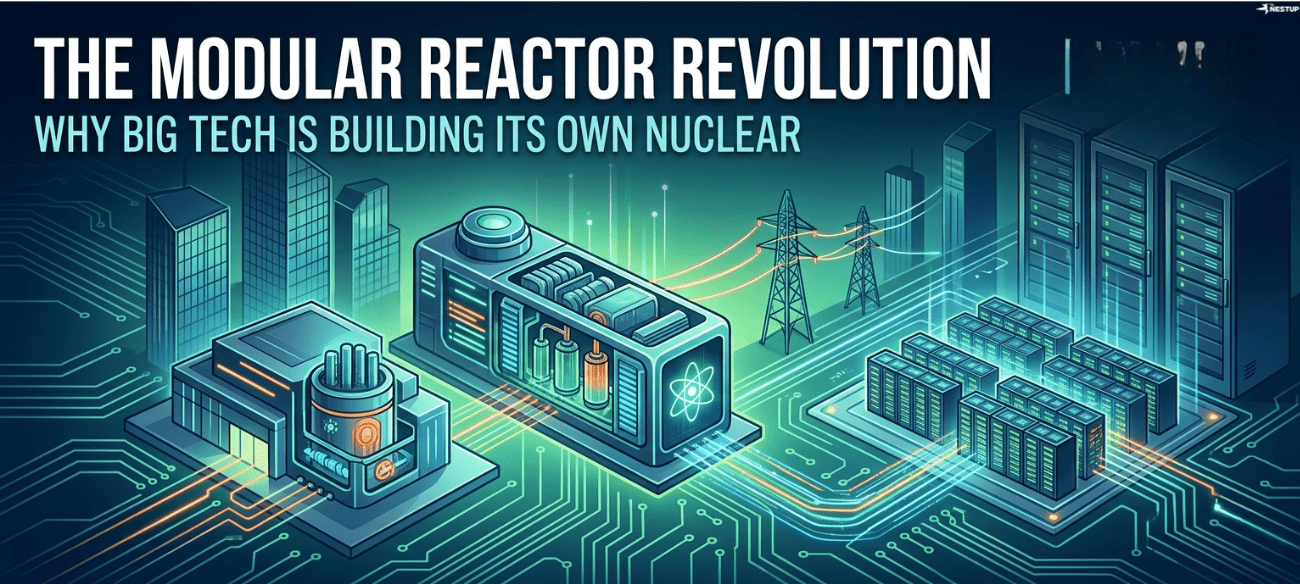
Big tech companies are investing in nuclear power to meet the soaring electricity demands driven by AI workloads. As traditional energy sources struggle to provide reliable and sufficient power, firms like Microsoft, Amazon, and Google are transitioning into energy producers, particularly focusing on Small Modular Reactors (SMRs) to ensure a stable energy supply for their data centers.
Key takeaways
- Big tech is pivoting to nuclear energy to meet the rising electricity demands of AI.
- Small Modular Reactors (SMRs) offer a practical solution for decentralized energy needs.
- Microsoft's deal to restart Three Mile Island marks a significant shift in nuclear energy perception.
- Amazon and Google are investing in advanced nuclear technologies for long-term energy security.
- The integration of AI and energy is creating a new industrial feedback loop.
What is the shift towards nuclear energy in big tech?
Tech giants are evolving from software providers to "digital utilities" by investing in their own energy infrastructure. This shift is essential for maintaining competitiveness in the AI landscape, as controlling energy resources becomes a strategic necessity.
Why are renewables insufficient for AI's energy needs?
While solar and wind energy have become more affordable, they cannot meet the continuous, high-density power demands of AI systems. Nuclear energy provides the reliability and efficiency necessary to support the operations of data centers.
What are the power requirements for AI infrastructure?
- Massive electricity loads for dense GPU clusters.
- Stable 24/7 uptime for global AI services.
- Predictable baseload generation unaffected by weather.
- High cooling capacity for hyperscale hardware.
- Grid reliability to prevent failures.
What are Small Modular Reactors (SMRs)?
SMRs are compact nuclear reactors generating between 50 and 300 megawatts. They represent a shift towards standardized manufacturing, making them suitable for decentralized AI infrastructures.
What benefits do SMRs offer?
- Manufacturing standardization for easier production.
- Reduced construction complexity through factory assembly.
- Lower upfront costs to encourage investment.
- Improved safety systems with passive cooling.
- Accelerated deployment timelines to keep pace with AI growth.
How is Microsoft leading in nuclear energy?
Microsoft's partnership with Constellation Energy to restart Unit 1 at Three Mile Island symbolizes a significant shift in nuclear energy's public image. This initiative demonstrates a commitment to treating energy as a strategic asset.
What strategies are Amazon and Google pursuing?
Amazon is focusing on existing nuclear assets through X-energy's high-temperature gas-cooled reactors, while Google is investing in innovative technologies with Kairos Power's fluoride salt-cooled reactors. Both companies aim to secure reliable, carbon-free energy for their operations.
How are AI and energy interconnected?
- AI models demand larger data centers.
- Data centers require more electricity than current grids can provide.
- Electricity demand strains existing infrastructure.
- Big Tech is integrating vertically by acquiring energy assets.
- Increased energy enables more powerful hardware.
- Larger AI systems drive further energy demand.
What cultural and geopolitical shifts are occurring?
A cultural shift is occurring as younger generations view nuclear energy as vital for decarbonization. Geopolitically, nations recognize that AI leadership and energy independence are crucial for maintaining a competitive edge.
What challenges lie ahead for nuclear energy and AI?
The collaboration between Silicon Valley and nuclear power faces significant hurdles, including regulatory challenges, fuel supply chain issues, and waste management. The success of AI may depend on the ability to scale nuclear energy production.
As we approach 2030, the future of the internet may hinge on our capacity to produce energy efficiently, highlighting the critical intersection of AI and nuclear power.